


In the ever-evolving business landscape, acquiring new skills through continuous learning and adapting to shifting demands is no longer a luxury -it’s a survival imperative. Or, to put it more bluntly, it’s the difference between thriving and becoming the next case study in organizational obsolescence.
Recently, I read the article Luces largas hacia el futuro del ‘management’ by Dr. Jordi Díaz, who eloquently underscores, among other future trends, the critical role of lifelong learning as the bedrock of sustainable and successful organizations, as well as the importance of adopting a more scientific approach to management, in contrast to “blindfolded” or “gut-feel” management. In this context, the scientific approach to management and liquid learning are intrinsically interconnected.
Building on this, I bring my own experiences not only as an HR executive, who’s spent more time than I’d like trying to bridge the gaping chasm between what businesses need and what traditional education systems actually deliver, but also as an academician and researcher, deeply immersed in studying organizational behavior, leadership models, and sustainable growth strategies.
Lifelong learning—or, as Zygmunt Bauman aptly termed it, liquid learning—is essential in an economy where the only constant is flux. In theory, learning should flow like a well-coordinated symphony, adapting seamlessly to individual needs and shifting societal demands. In reality, however, the current educational systems are often as rigid as a 1990s desktop computer—capable, but ill-suited for today’s dynamic environment. Overqualification rates in Spain, where 35.8% of workers are mismatched to their jobs, serve as a stark reminder of how misaligned these systems are with market demands. Add to that the 30% of graduates working in completely unrelated fields, and the gap between what businesses need and what education delivers starts to look less like a disconnect and more like a Grand Canyon.
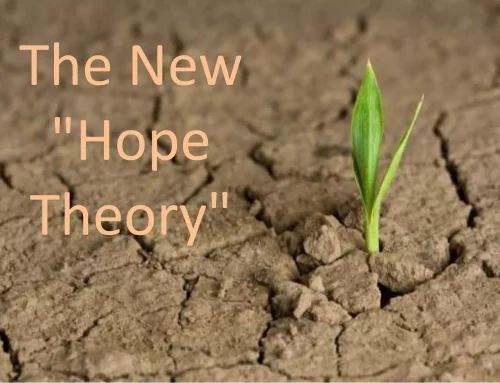
Yet, hope exists. Initiatives like Singapore’s SkillsFuture show us how targeted subsidies and industry-aligned training can turn the tide, equipping over 600,000 participants annually with relevant, actionable skills.
To keep up with these demands, flexible and modular learning models, such as micro-credentials, are proving indispensable. These models don’t just teach; they cater to the real-world need for balancing work, education, and life’s many curveballs. It’s no surprise that a global survey by Pearson found 72% of workers prefer this approach. Denmark’s state-funded programs are leading by example, reducing unemployment and ensuring inclusivity, while Germany’s dual education system combines classroom learning with hands-on apprenticeships, churning out future-ready employees and maintaining one of the lowest youth unemployment rates in Europe. Clearly, the rest of the world has some catching up to do.
But liquid learning is more than an economic tool; it’s a societal game changer. By reducing inequality and boosting civic engagement, it fosters the kind of community resilience we desperately need. For instance, increasing women’s access to education could boost GDP by 3–5% in many countries. Globally, upskilling efforts could inject a staggering $6.5 trillion into the economy by 2030. Even more compelling, lifelong learners are 30% more likely to contribute to their communities, strengthening social cohesion and participation. Imagine this: learning as the societal glue binding communities, organizations, and economies together. This is the essence of liquid learning—flexible, evolving, and essential for bridging the gap between education and the ever-changing needs of businesses and society.
However, policies and partnerships alone won’t save us. To create resilient economies and equitable societies, we need a fundamental cultural shift. Bauman’s concept of liquidity reminds us that in a world of constant transformation, learning cannot remain static. And yet, we’ve clung to outdated systems that prioritize convenience over purpose, quick fixes over resilience. The timeless wisdom that “hard times create strong men, strong men create good times, good times create weak men, and weak men create hard times” serves as a cautionary tale. Without a cultural pivot toward effort, sacrifice, and purpose, we risk perpetuating a cycle of complacency and decline.
This is not just about teaching technical skills; it’s about reshaping mindsets to embrace change and thrive in uncertainty. Harvard’s Future of Work Initiative estimates that 50% of core job skills will shift by 2030. This makes liquid learning not just a luxury but an imperative—a survival strategy in a world where adaptability is the new currency of success.
The choice before us is stark: invest in revolutionizing education, fostering liquid learning, and building resilient systems—or risk falling behind in a rapidly evolving world. As Harvard aptly states, “The future belongs to those who prepare for it today.” The question is, are we ready to trade short-term convenience for long-term resilience, to invest in the effort it takes to create a sustainable and equitable future? Because if we’re not, the answer isn’t just about how we’ll face tomorrow’s demands—it’s about whether we’ll survive them at all.
Author: Barbara Gawior

Leave A Comment